


Pressure testing and vacuum filling are both used during cooling system service, but they perform different jobs. A pressure tester helps locate leaks, while a vacuum filler removes trapped air and draws new coolant into the system. Understanding this difference can prevent incorrect tool selection and unnecessary repeat work.
Pressure Testing Is Used to Check for Leaks
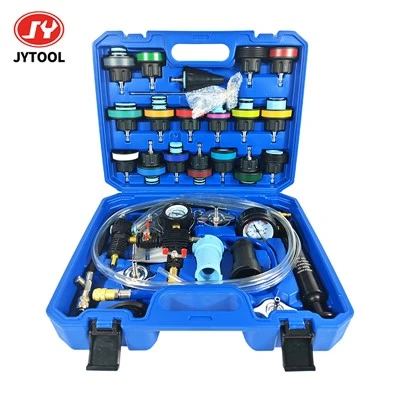
A cooling system pressure tester usually includes a hand pump, pressure gauge and a selection of radiator or expansion tank adapters. Once the correct adapter is installed, the pump applies controlled pressure to the cooling system.
If the gauge reading falls, the technician can inspect the radiator, hoses, clamps, water pump and thermostat housing for coolant leakage. Pressure testing is particularly useful when a vehicle is losing coolant but no obvious puddle is visible.
The engine should be cold before testing. The applied pressure must not exceed the limit specified by the vehicle manufacturer or radiator cap. Excessive pressure may damage hoses, seals or other cooling system components.
A falling reading does not immediately identify the leaking part. The adapter and pump connections should also be checked because a poor seal can produce a similar result.
Vacuum Filling Is Used After Draining the System
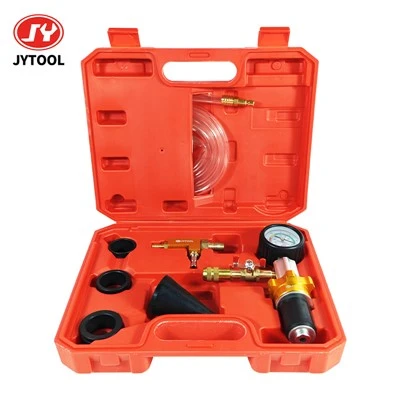
A coolant vacuum filler is normally used after coolant has been drained or a cooling system component has been replaced. It connects to the radiator or expansion tank filler neck through a suitable rubber adapter.
Compressed air passing through the tool creates a vacuum inside the cooling system. The gauge allows the operator to confirm that a vacuum has been established. Once the reading is stable, a hose is placed in a container of correctly mixed coolant. Opening the filling valve allows the vacuum to draw coolant into the system.
This method can reduce the amount of air left in hoses and other high points. However, some vehicles may still require an additional bleeding procedure according to the manufacturer's service instructions.
The Two Methods Are Not Interchangeable
Pressure testing introduces pressure to help reveal coolant leaks. Vacuum filling removes air and assists with refilling. Although both tools use a gauge and connect to the cooling system, one should not be treated as a replacement for the other.
A practical workshop sequence may include both methods. The system can first be pressure-tested when a leak is suspected. After repairs are completed and the old coolant has been drained, a vacuum filler can be used to check the connection and refill the system with less trapped air.
Selecting the tool according to the task makes cooling system service more reliable. Tool components and basic specifications for vacuum refilling are listed on the Cooling System Refiller page.


